Fjord, Fur, and Me – Dawn Nielsen
How Dawn Nielsen became Danish and helped in the creation of Thomas Dambo’s Fjord Faergemand
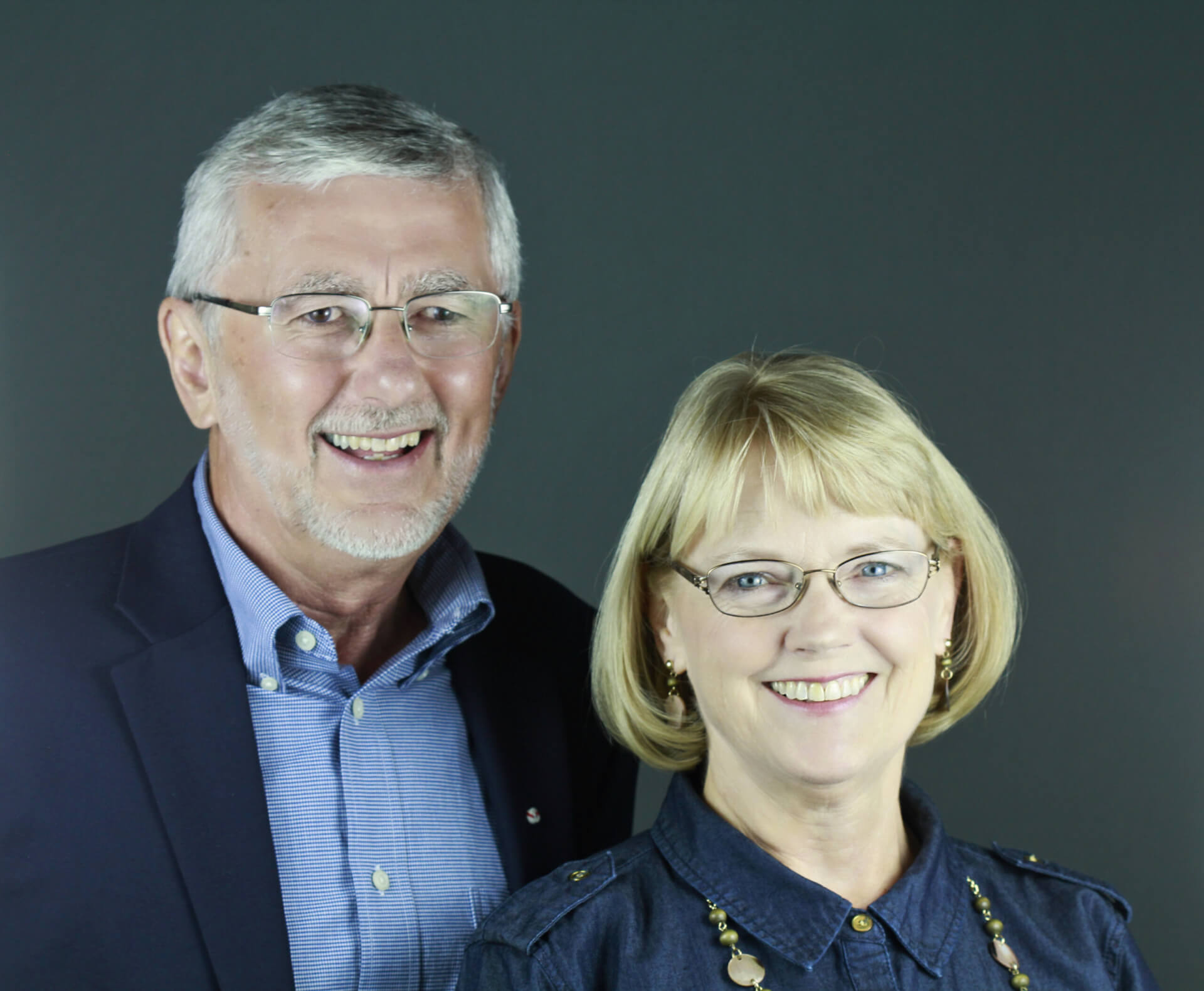
Everyone in the MoDA community knows John Mark Nielsen and his long association as a past board member and director of the museum. I am Dawn, wife of John Mark, and I have been along on the journey from the time the museum was just a dream to where it is today. I’ve always felt a part of the Museum of Danish America, but now I’m a part of Fjord Færgemand, too.
I grew up in a small farming community in eastern Nebraska settled largely by German immigrants. I thought my family background was predominantly German, as evidenced by hearing my great-grandmother and great-aunts speaking German to each other. I heard many “Ochs” denoting frustration or annoyance coming from their kitchen.
When I came to Dana College as a student in 1970, and Professor Norman Bansen asked about my family background, I said German. His response was “then your family probably came from northern Germany” as I had blond hair and blue eyes. I really didn’t know. Then I met John Mark Nielsen, and my experience with all things Danish changed dramatically. Three of his grandparents immigrated from Denmark so his roots are recent.
I too, have roots in Denmark, though not quite so direct. Whenever I have met Danes or Danish Americans and they have asked, “Are you Danish?” I’ll say “Slesvig Holstein” and their response is, “Close enough.” One of my great-grandfathers immigrated from the Neumunster area of northern Germany, Holstein, and a great-grandmother immigrated from Slesvig, also in northern Germany. Both Slesvig and Holstein were once duchies of Denmark, under the King’s dominion, so at one time they were Danish.
So how does this connect me to Fjord Færgemand?
 The farm in eastern Nebraska where Dawn Nielsen was raised circa 1955. The recycled wood for the troll was sourced from the farmhouse and the barn.
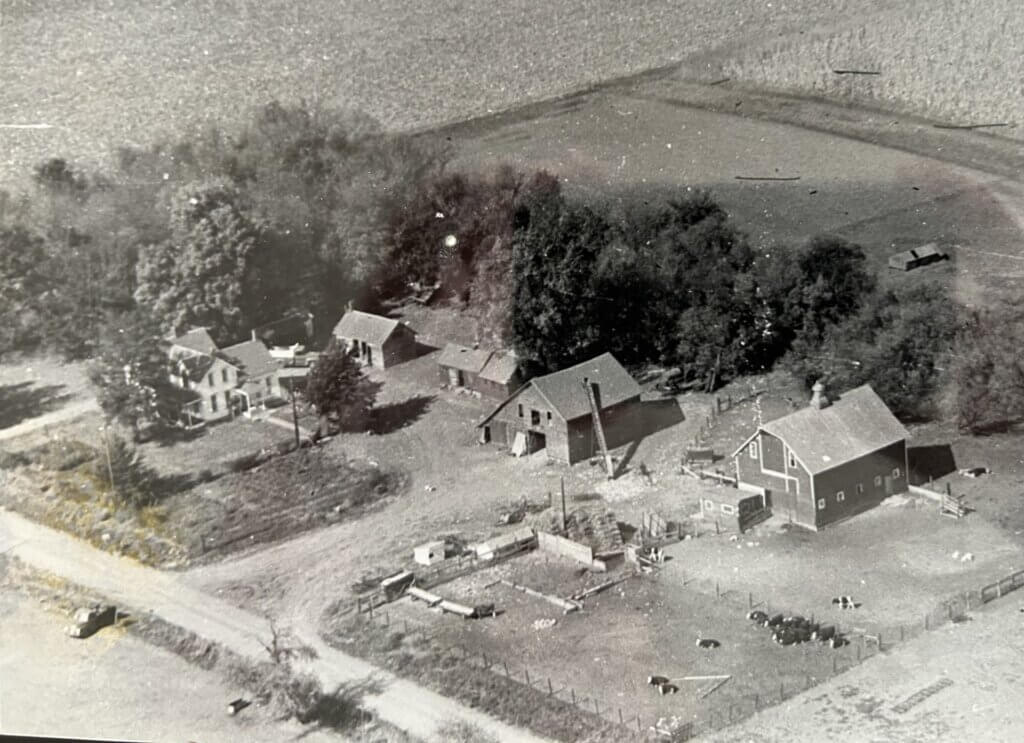
The farm where I grew up was acquired by my Holstein born great-grandfather when the family who homesteaded it went bust. The farmhouse and barn were built in the 1870s-1880s, so definitely in that immigration to the Midwest era. Though John and I still live in Blair, we acquired the farm place in 2005 after my parents died. The barn had been knocked off its foundation by too many strong prairie winds, so we dismantled it and saved much of the hay loft flooring and floor joists. The farmhouse, built over a fruit cellar and a foundation of five bricks, was also torn down, but we salvaged much of the old growth fir sheathing attached with square nails. Both the barn and house wood were stacked in a storage space John ingeniously fashioned at the back of the machine shed. The machine shed itself was built of wood from a barn several miles away which my dad bought and with the help of my brothers, tore down and created the new structure on our place. Using recycled wood must be in my genes.
After the February board meeting, John and I learned that MoDA needed recycled wood to build a Thomas Dambo troll. I immediately thought of all that wood we had stacked in the back of the machine shed. When we mentioned it to Erik, his response was, “I’ll be there Sunday to take a look.” Erik not only drove the 100 plus miles to the farm, but he and John spent several hours pulling long planks and boards from the very dusty machine shed. A few days later, Erik, Mike Howard, and Mike Riggs joined us at the farm pulling a long trailer and the first batch of Fjord wood traveled to the museum. Another batch went a few weeks later.
If you look closely at Fjord’s “fur” you will see shingle-sized, dark brown, old-growth fir with square nail holes. That is the immigrant era wood from the farm house where I grew up long before I knew I had Danish roots and how Danish I would become.
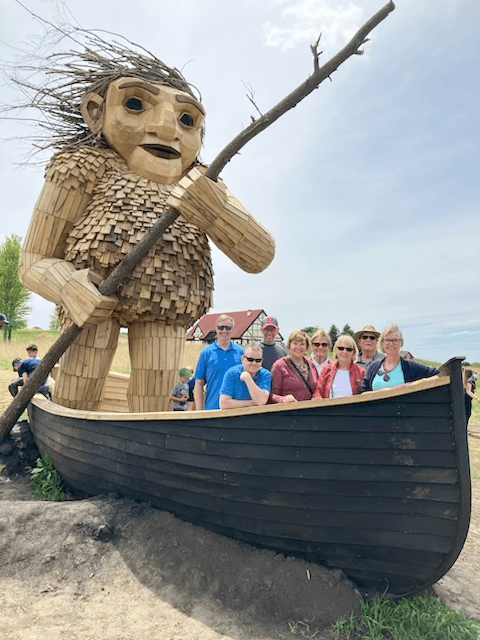
On May 23, during the Saturday of Tivoli Fest, my two brothers and sister and their spouses met John, our son Kaj and me in Elk Horn. We all made the trek out to the prairie to meet Fjord, the newest member of our family.
My siblings, along with John and I, are very proud we could contribute to the creation of Fjord, who represents not just Danish immigrants but all immigrants who have come to the United States to find a better life.
I’m also glad Fjord is sailing the boat surrounded by the prairie that is being established on the museum grounds since 2012. I helped plant some of those first prairie plants from Midwest Groundcovers, and John and I are still involved in the Jens Jensen Prairie Landscape advisory committee today.
Fjord Færgemand is a wonderful symbol to the contributions of immigrants, the values of recycling and the efforts to achieve sustainability for the sake of the planet. How cool is that!