
Museum of Danish America Opens New Interpretive Space Highlighting Restored Tallgrass Prairie
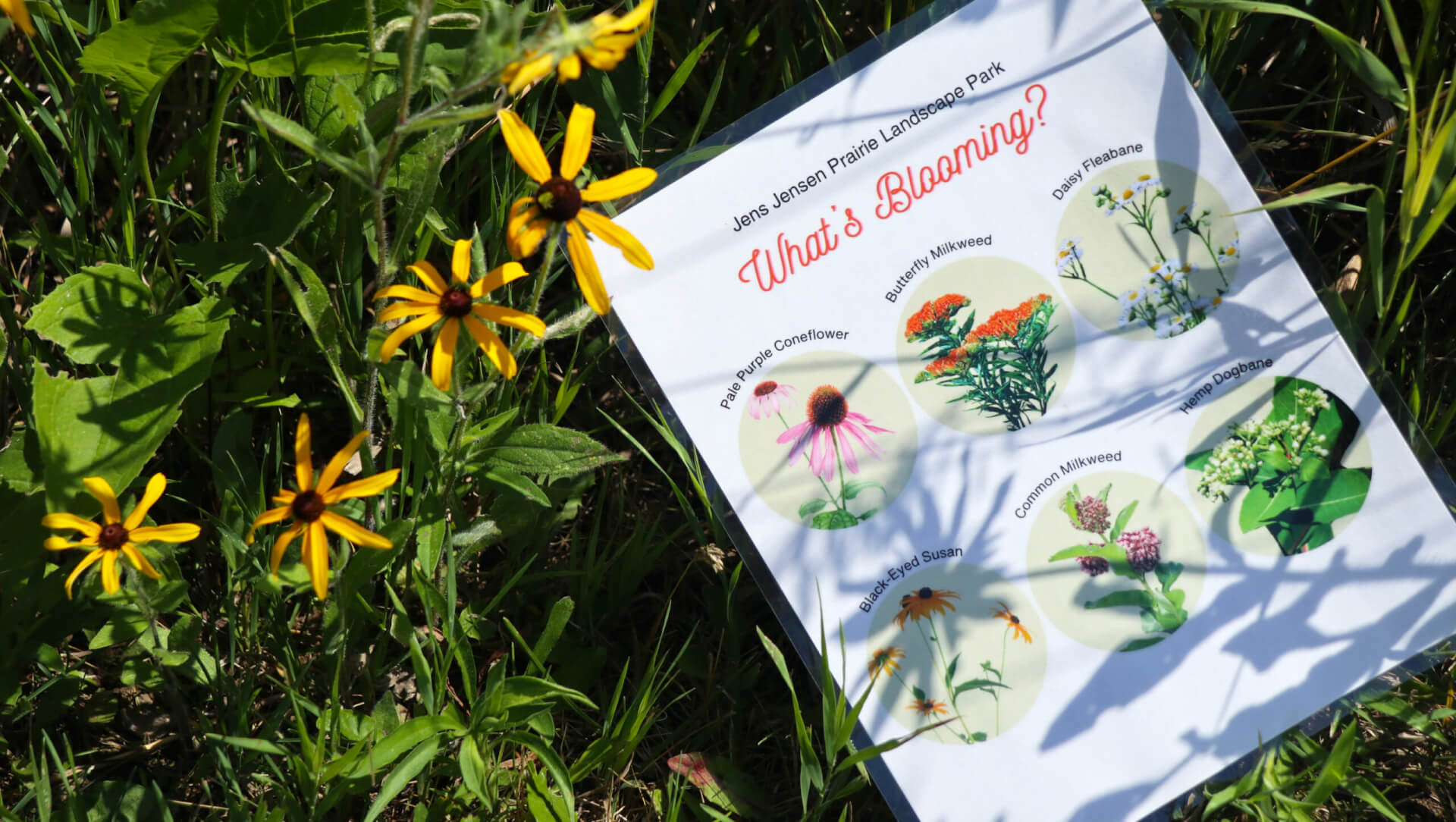
The Museum of Danish America has unveiled a new interpretive space designed to inspire visitors to explore and better understand the Museum’s restored native tallgrass prairie.
Located inside the Museum, the new display serves as an introduction to the Jens Jensen Prairie Landscape Park and encourages guests to experience one of Iowa’s most endangered ecosystems firsthand. The space features a large educational banner illustrating the extensive root system of big bluestem, a butterfly identification checklist, and informational sheets highlighting native plants currently in bloom throughout the prairie.
The interpretive area was created to help visitors connect what they see indoors with what they discover outside, while emphasizing the ecological importance of native prairies. Once covering approximately 80–85 percent of Iowa, tallgrass prairie now occupies less than one percent of the state’s landscape. Restored prairies provide essential habitat for birds, butterflies, bees, and other pollinators, improve soil health, and help protect water quality.
Visitors are encouraged to continue their exploration by walking through the Museum’s restored prairie, where seasonal blooms and wildlife offer a continually changing experience throughout the growing season.
“This interpretive space is the first of many steps we’re taking to become even better stewards of our restored prairie,” said Museum staff. “By helping visitors understand the plants, pollinators, and wildlife that depend on this landscape, we hope they’ll leave inspired to appreciate—and help protect—the native prairies that remain.”
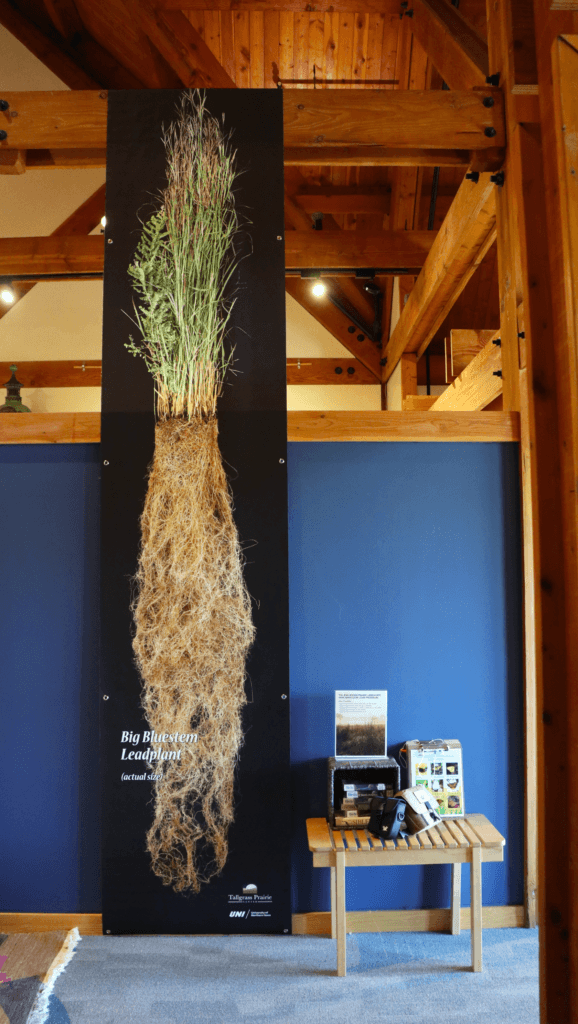
To further support prairie exploration, the Museum also offers complimentary binocular and field guide check-out. Guests may borrow these resources before heading outside to observe birds, butterflies, and native plants more closely.
Whether discovering the remarkable depth of prairie roots, identifying blooming wildflowers, or spotting pollinators at work, the Museum invites visitors to experience the restored prairie one root, bloom, bird, and butterfly at a time.