Christian IX
Portrait of King Christian IX hung at Amalienborg Palace
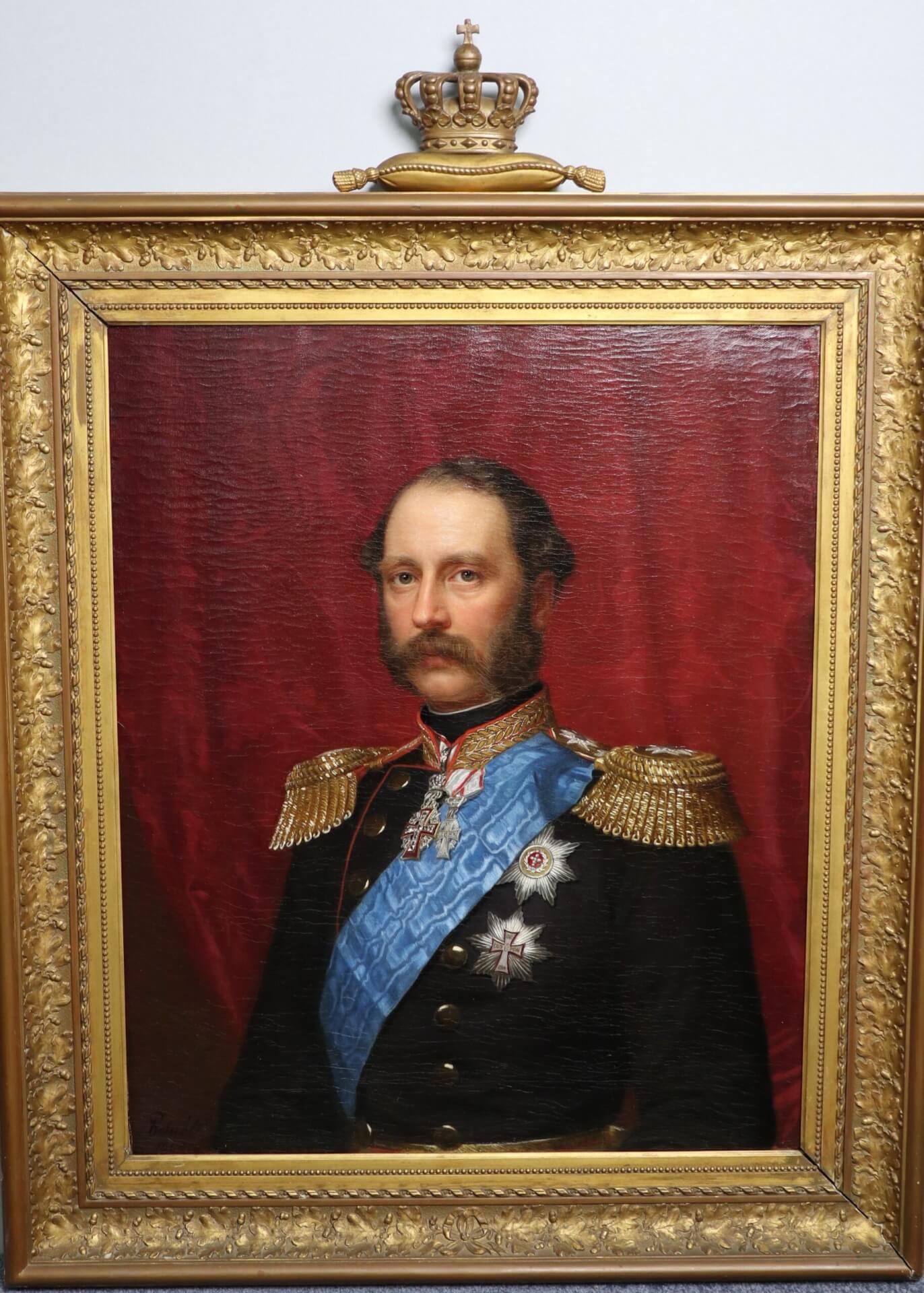
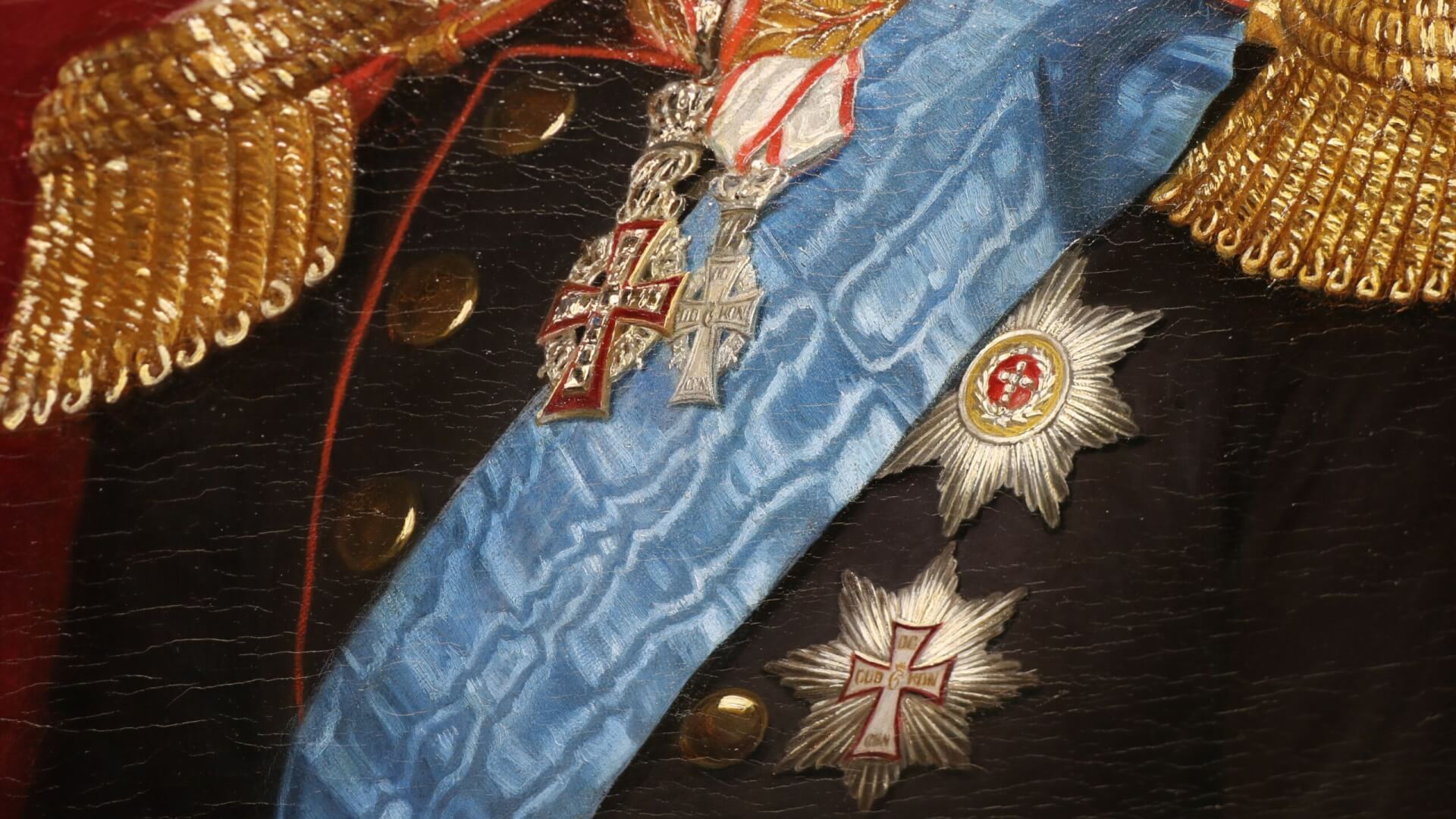
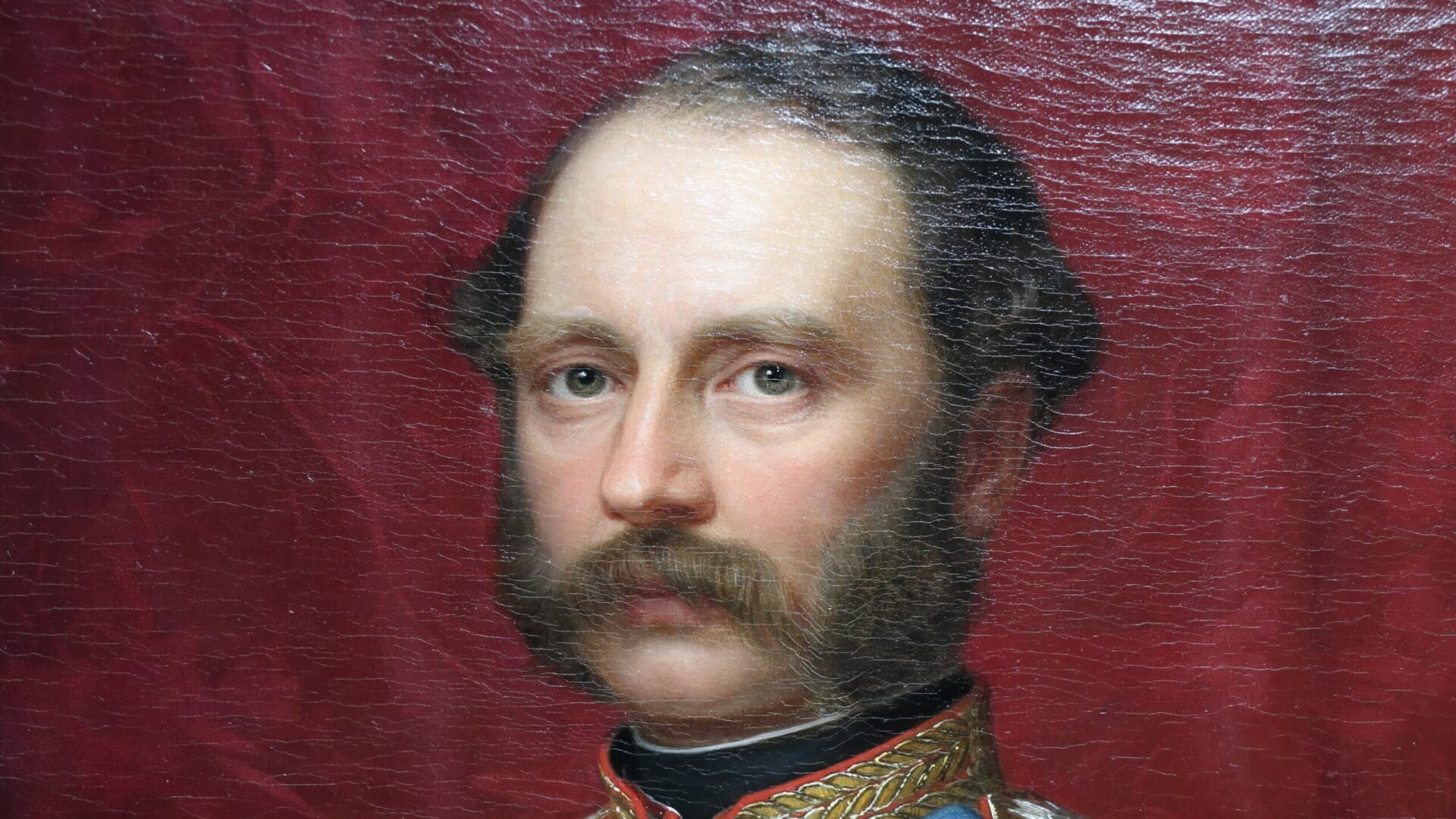

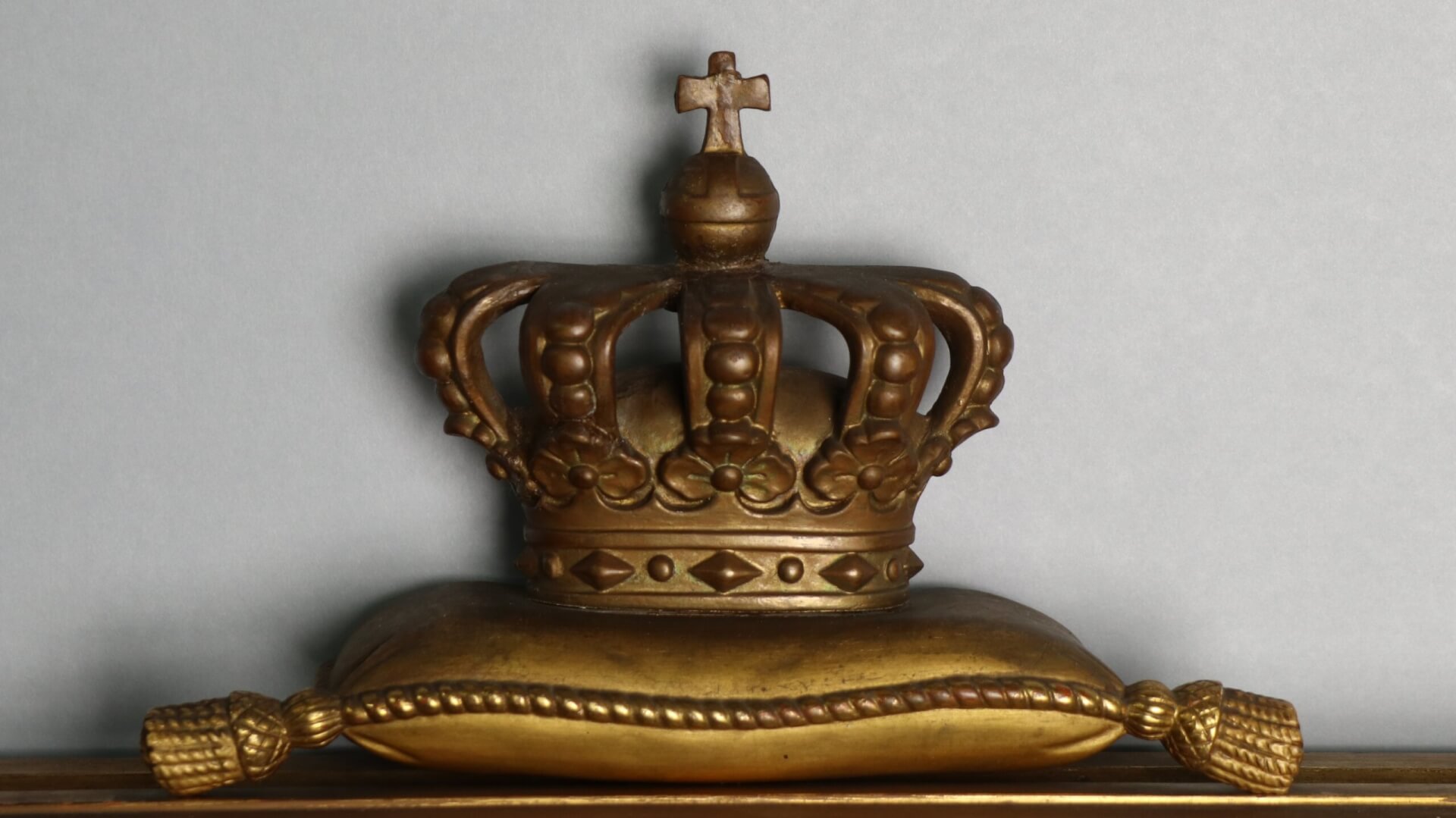
This portrait originally hung at Amalienborg Palace, the main residence of the Danish royal family. It was painted in 1868, five years after Christian ascended the throne.
Christian IX’s rule (1863-1906) started tumultuously. His predecessor, Frederik VII, following the trends coursing through Europe, had abolished absolutism in favor of a constitutional monarchy. A stress point in the transition was a dispute about how to rule the king’s personal duchies of Slesvig and Holstein. This question was unresolved when Christian IX’s reign started and led to Denmark’s defeat in the second Danish-Prussian War, which cost Denmark the king’s German holdings. This unlucky start of his reign made him unpopular, but in his later years he became well-liked in part to his unobtrusive behavior and long rule. Christian IX is now known as “the father-in-law of Europe” because of the marriages between his seven children and other royal families.
Christian IX
Denmark
1868
Canvas, Paint, Wood, Gold, Metal
Gift of Christian Castenskiold
2017.049.001
Frederik VIII
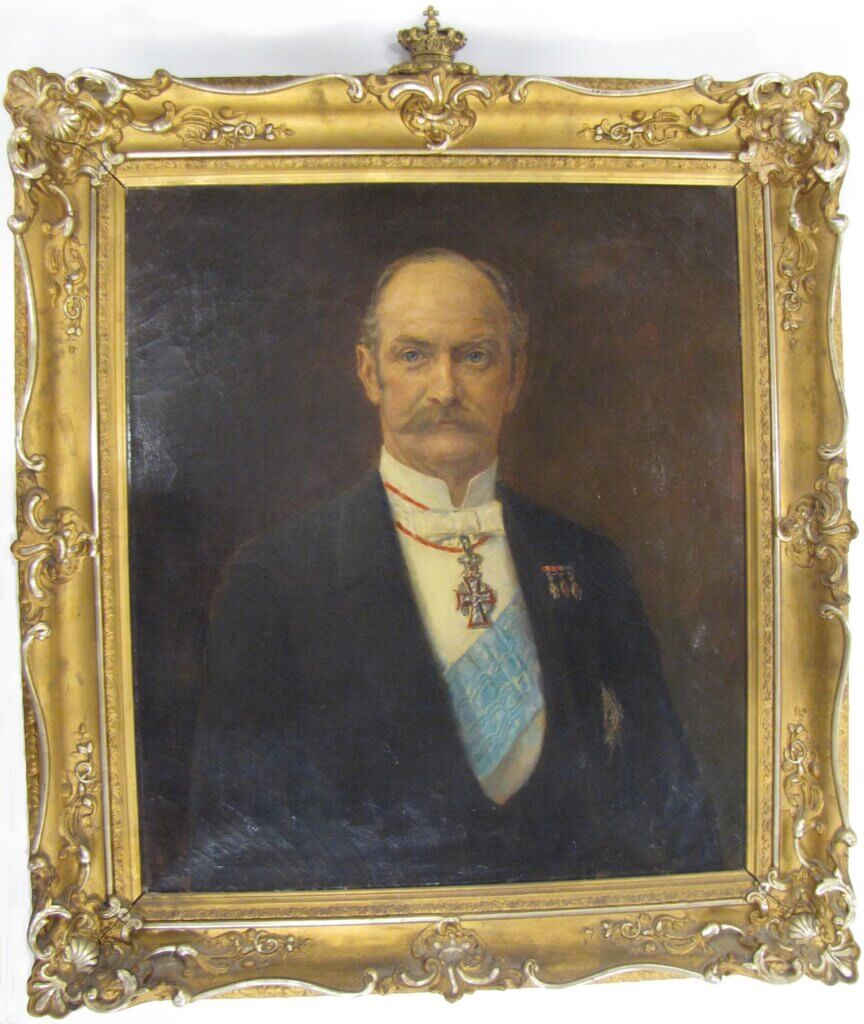
Like the portrait of Christian IX, this portrait hung at Amalienborg Palace. Frederik VIII (ruled 1906-1912) did not rule long but his legacy remains. His New Years speeches were the first to be published in newspapers and the phrase “Gud bevare Danmark” (God preserve Denmark) at the end of the speech has since become tradition. Two of his sons became kings: Christian X of Denmark and Haakon VII, born Carl, who was elected as the king for Norway after their independence from Sweden in 1905.